There's a point most growing businesses reach where the software stops fitting. You're running the operation across three tools that don't talk to each other, exporting spreadsheets to move data between them, and paying somebody to retype the same information twice. Somebody suggests building something custom, and the question becomes whether that's a smart investment or an expensive detour.
It can be either. The difference is usually knowable in advance.
Start With the Assumption That You Should Buy
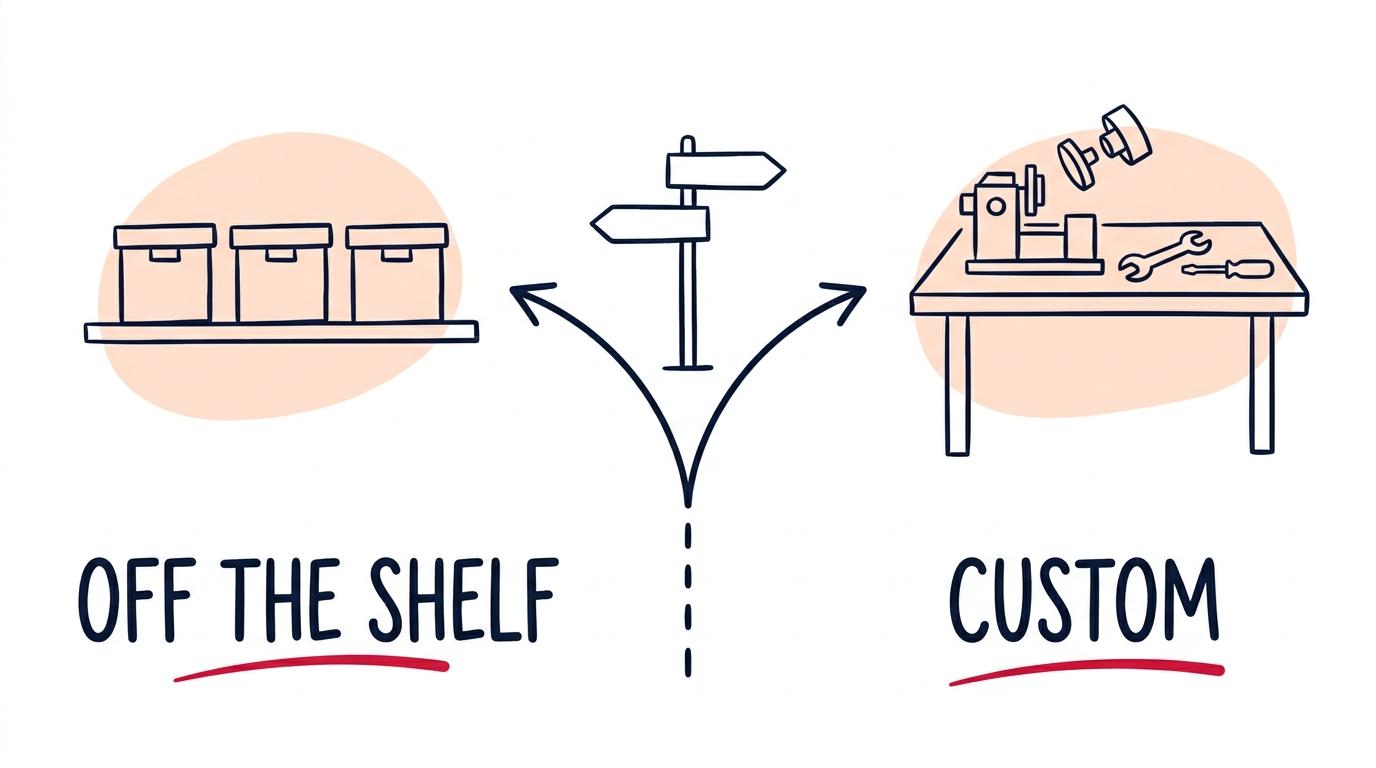
This is the honest default. Off the shelf software is dramatically cheaper, available immediately, maintained by somebody else, and improved without you paying for it. Thousands of other businesses have already found the bugs. For the large majority of needs, something adequate already exists.
Custom software earns its cost only when buying genuinely fails. So the useful question isn't whether custom would be nicer. It's whether the available options actually break down for you.
When Buying Genuinely Falls Apart
There are a few situations where existing tools stop being the sensible answer.
- Your process is the product. If the specific way you do the work is what makes you better than competitors, software that forces you into a generic process erases the advantage you're being paid for.
- The integration tax has gotten absurd. When people spend hours every week moving data between systems by hand, that labor has a real annual cost that's easy to calculate and often shocking.
- Per seat pricing has outgrown a build. Some tools cost little for five people and enormous amounts for eighty. At a certain headcount the math flips.
- Nothing on the market does it. Occasionally your need is genuinely unusual, and the search keeps returning tools that solve an adjacent problem rather than yours.
- The data is the asset. If the information your business accumulates is central to its value, having it locked inside somebody else's platform is a strategic risk rather than a convenience.
If none of these apply, buy something. You'll be running next week instead of next year.
Work Out What "It Doesn't Fit" Actually Means
Before pricing anything, get specific about the complaint. Software that doesn't fit usually fails in one of a few distinct ways, and they've different answers.
- It can't do the thing at all. A genuine capability gap, and the strongest case for building.
- It can, but only awkwardly. Everyone has a workaround they've stopped noticing. Often solvable with configuration or training rather than code.
- It does the thing, but the data is stranded. The tool works and can't talk to your other systems. This is an integration problem, not a replacement problem.
- It works but costs too much at your size. A pricing problem, which sometimes gets solved by negotiating or switching rather than building.
- Nobody uses it properly. An adoption problem. Building something new will inherit exactly the same issue.
That last one is worth sitting with. If the current system fails because people route around it, custom software will be routed around too. The problem is process, and no amount of engineering fixes it.
What Custom Actually Costs
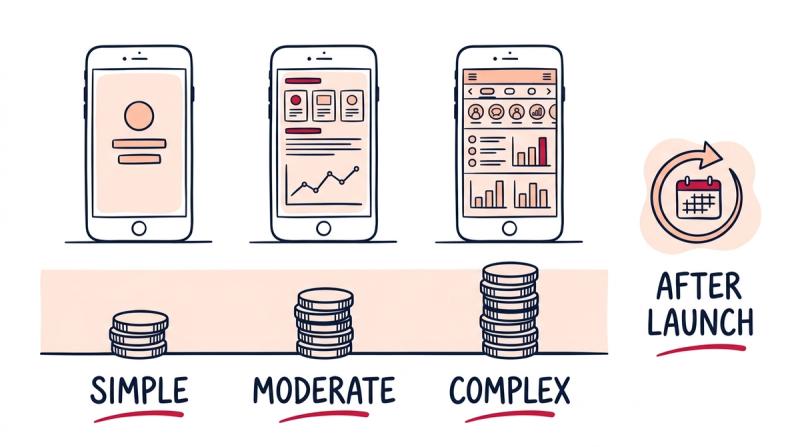
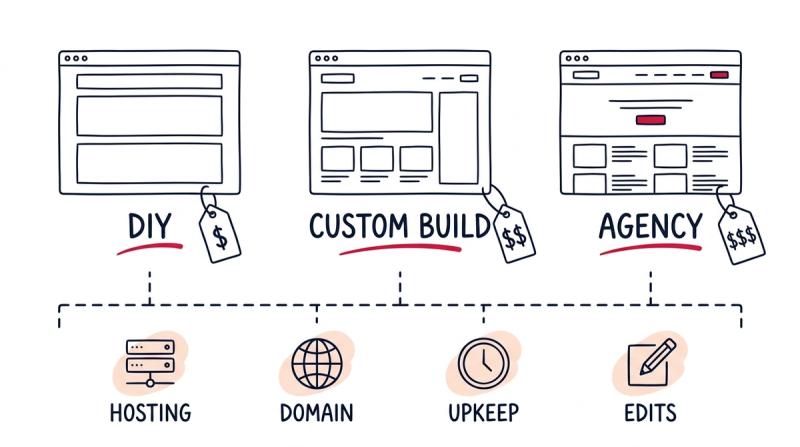
Custom software for a small business generally starts around 20,000 to 50,000 dollars for something focused, and climbs from there with complexity. There's also ongoing maintenance, usually 15 to 25 percent of the build cost per year, because dependencies age and security patches aren't optional.
Set that against what you're spending now. Subscription fees, the hours lost to manual work, and the cost of mistakes that a purpose built system would prevent. Sometimes the comparison makes the decision obvious in one direction, and sometimes it makes clear that the pain is annoying but not expensive enough to justify a build. Both are useful answers. We went through the cost drivers in more depth in How Much Does It Cost to Build an App.
The Middle Path Most People Skip
The choice is rarely as binary as it gets framed. Between buying a rigid product and building an entire platform there's a large and underused space.
- Keep the tools that work and connect them. A relatively small integration can eliminate the manual data shuffling without replacing anything.
- Buy the core, build the edge. Use an established system for the standard parts and build custom only for the piece that's genuinely specific to you.
- Automate the worst task first. Find the single most painful recurring job and remove it. This is often a fraction of the cost of a full build and captures most of the benefit.
Most businesses that think they need a platform actually need one or two of these. Starting here also teaches you what a bigger build would need to do, which makes the bigger build better if you eventually want it.
Questions to Answer Before You Commit
- What specifically does the current setup prevent you from doing?
- How many hours a week go into working around it?
- What happens to that number if the business doubles?
- Have you looked at tools built for your particular industry, rather than general ones?
- Could an integration or a single automation solve most of it?
That fourth question catches a lot of people. General purpose software often fits badly while a niche tool built for your trade fits well, and nobody looked because the search stopped at the obvious names.
The Responsibilities That Come With Owning Software
Buying software means renting a solution and also renting somebody else's obligation to keep it running. Building means taking that obligation on, and it's worth being clear about what it includes.
- Security is now yours. Vulnerabilities appear in the underlying components over time and have to be patched whether or not anything else is happening.
- The platform moves underneath you. Browsers, operating systems, and payment providers change. Software that isn't maintained doesn't stay still, it degrades.
- Somebody has to understand it. If one developer built it and disappears, you own something nobody can safely change. Documented code and access to your own accounts and repositories aren't optional details.
- Changes have a lead time. With a subscription, a missing feature might arrive in an update. With custom, nothing arrives unless you commission it.
None of this argues against building. It argues for going in knowing that the build price is the start of the commitment rather than the whole of it, and for insisting on ownership of the code and accounts from the first conversation.
Build When the Fit Is the Point
Custom is worth it when the way you work is the thing worth protecting. Forekala is a reasonable illustration. Budgeting apps already exist in quantity, but the ones on the market assume one person doing the budgeting with one methodology. Building something flexible enough for a whole household with different habits was the entire reason the product had a right to exist. A configured off the shelf tool would've produced a worse version of what was already available.
That's the test. If custom would give you a slightly nicer version of something you can buy, buy it. If it would let you do something the market can't do at all, that's when building starts to pay for itself.