
Someone who needs a lawyer, an accountant, a financial adviser or an insurance agent rarely contacts just one. They fill in a form on two or three websites, maybe leave a voicemail, and get on with their day. Whichever firm gets back to them first, with something useful, usually gets the first real conversation.
That’s speed to lead: how quickly you respond to a new inquiry. It’s a familiar phrase on sales teams, and it matters just as much for firms that would never describe what they do as sales.
What Speed to Lead Means
Speed to lead, also called lead response time, is the gap between the moment a prospect reaches out and the moment they get a meaningful response from you. The inquiry might be a web form, a phone call, a text, a chat message or an email.
Two details in that definition matter. The clock starts when they reach out, not when someone in your office notices. And a meaningful response is one that moves things forward, such as a reply that confirms what happens next or offers a time to talk. An auto reply that only says "we received your message" stops the clock in your CRM, but not in the prospect’s head.
Why the First Hour Matters
The most cited research on this is a 2011 Harvard Business Review study, The Short Life of Online Sales Leads. It found that firms that tried to contact a lead within an hour were nearly seven times as likely to have a meaningful conversation with a decision maker as firms that waited even an hour longer, and more than 60 times as likely as firms that waited a day or more.
The same research audited 2,241 US companies and found that 23% never responded to an inquiry at all. Among those that did, the average response time was 42 hours. A lot has changed since 2011, but not the direction. People expect faster replies now, not slower ones.
For a professional services firm the logic is simple. Someone with a legal problem, a tax notice or a coverage question is usually anxious and wants to feel that someone has it in hand. The first firm to make them feel that way has a real advantage, and the firm that calls back two days later is often calling someone who’s already booked elsewhere.
Where Firms Lose Time
Slow response is rarely about effort. It’s about structure. The usual gaps:
- After-hours inquiries. A form submitted at 8pm on a Thursday waits until Friday morning, behind everything else in the inbox.
- Calls nobody can answer. Attorneys are in court, accountants are in client meetings, agents are on the road. A missed call becomes a voicemail, and many callers don’t leave one.
- Shared inboxes nobody owns. When everyone can see an inquiry, it’s easy for everyone to assume someone else has replied.
- Intake that waits for a professional. If a lawyer or a CPA has to look at every inquiry before anyone replies, the reply waits for their calendar.
- Retyping. Details copied by hand from the form to the CRM to the calendar add a delay at every step.
What a Fast Response Looks Like
Fast doesn’t mean a partner answering every form within five minutes. It means two layers working together.
The first is an immediate, automated reply, within a minute, that’s genuinely useful. It confirms what they asked about, tells them what happens next and when, and gives them a way to book a time straight away. It should read like a message from your firm, not from a no-reply system.
The second is a person, quickly. During business hours that might mean within the hour. Routing helps here: the inquiry should land with the right person based on what it’s about, with the details already in your system, so the call opens with what they need rather than "how can I help?"
Together these close the gap. The prospect knows they’ve been heard, and they’ve got a time on the calendar before they’ve finished contacting your competitors.
Missed Call Text Back
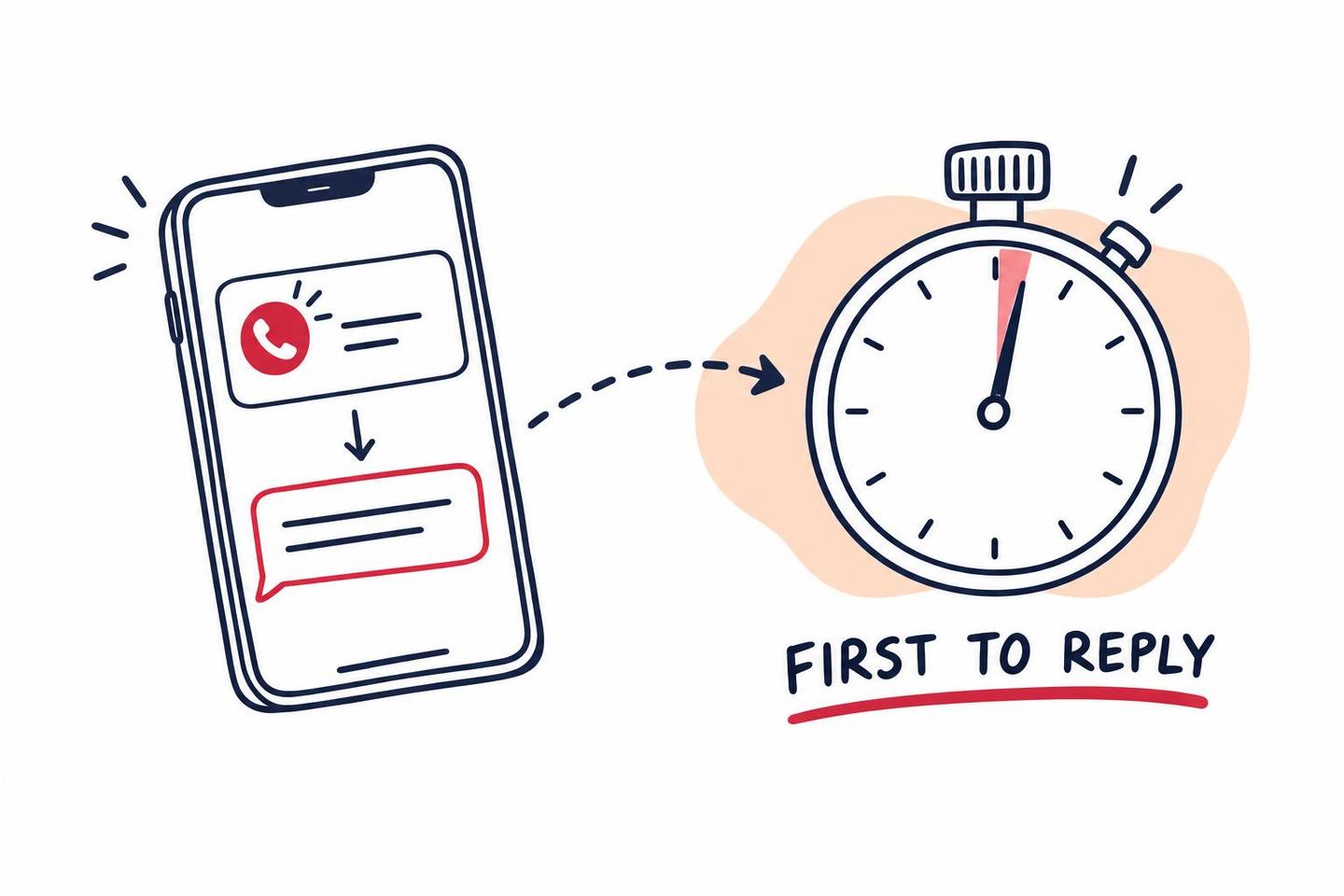
Phone calls bring in many of the most motivated inquiries, and they’re where a lot of them are lost. Missed call text back is a simple fix: when a call to your business number goes unanswered, the caller gets a text within seconds.
Something like: "Sorry we missed your call. This is the team at [your firm]. What can we help with? Reply here or book a time at [link]." Many people would rather text than leave a voicemail anyway, and the reply gives you a written note of what they need before you call back.
Two practical notes. In the US, businesses texting from local numbers through software generally need to register their brand and use case with the carriers, known as 10DLC registration, so allow time for it in your setup. And keep the text to acknowledgment and scheduling. It isn’t the place for advice.
Automated Follow-Up That Doesn’t Feel Automated
Plenty of prospects don’t reply to the first message. They got busy, they’re comparing options, or they’re not quite ready. Automated follow-up keeps the door open without anyone having to remember to.
A simple sequence works for most firms:
- Right away: the immediate reply described above.
- The next day: a short, personal note from the person who’ll handle it, with the booking link.
- A few days later: something useful related to their question, such as a list of documents worth gathering.
- About a week later: a brief last check-in that makes it easy to say "not now."
What keeps it from feeling robotic: it stops the moment they reply or book, it comes from a real person’s name, every message has a reason to exist, and nothing pretends to be typed by hand when it wasn’t.
Professional Rules Still Apply
Firms in regulated fields need a little extra care. An automated reply should acknowledge and schedule, not advise. Law firms should make sure early messages don’t suggest an attorney-client relationship exists before a conflict check, and financial and insurance firms should confirm their messaging and record keeping fit their compliance requirements.
None of this rules out speed. It just shapes what the fast message says.
How to Measure Your Speed to Lead
You can’t improve what you aren’t timing. Start with three numbers:
- Median time to first response, from the moment an inquiry arrives to the first meaningful reply.
- The share answered within an hour during business hours.
- The same figures for after-hours inquiries, measured separately, because they usually look very different.
Then test it yourself. Submit your own website form on a weekday evening. Call your main number over lunch. Note how long it takes to hear back and what the reply says. It’s the quickest honest read you’ll get.
Where to Start
If you do one thing, make sure every inquiry, by form or by phone, gets an immediate, useful reply and lands with a named person. That alone closes most of the gap. Missed call text back and a short follow-up sequence are the natural next steps.
Speed to lead is one of the workflows in Workflow Automation Examples for Professional Services Firms, alongside intake, onboarding and document collection. If you’d like help setting it up for your firm, it’s a natural place for our workflow automation work to start.

 You’ll talk to Andrew directly.