Search changed faster in the last two years than in the decade before it. A large share of queries now return an AI generated summary above the results, and a growing number of people skip search engines altogether and ask an assistant instead.
For a small business this creates an obvious worry. If the answer appears without anyone clicking, what happens to your traffic? The concern is fair. But being the source an AI answer draws from is achievable, and most of what it requires is work you can do without any special tooling.
Understand What Changed
Traditional search returns a ranked list and you choose. AI search reads a set of sources, synthesizes an answer, and usually cites a few of them.
Two consequences follow. Some informational queries now get resolved without a visit, which means clicks fall for content that answers simple questions. And being cited becomes its own goal, because a citation puts your name in front of somebody at the moment they're learning about the thing you do.
The businesses hurt most are those whose traffic depended on answering easy questions with thin pages. Businesses with genuine expertise and specific content are in a better position than they were, because the bar for what gets cited is higher than the bar for what used to rank.
Write Pages That Are Easy to Quote
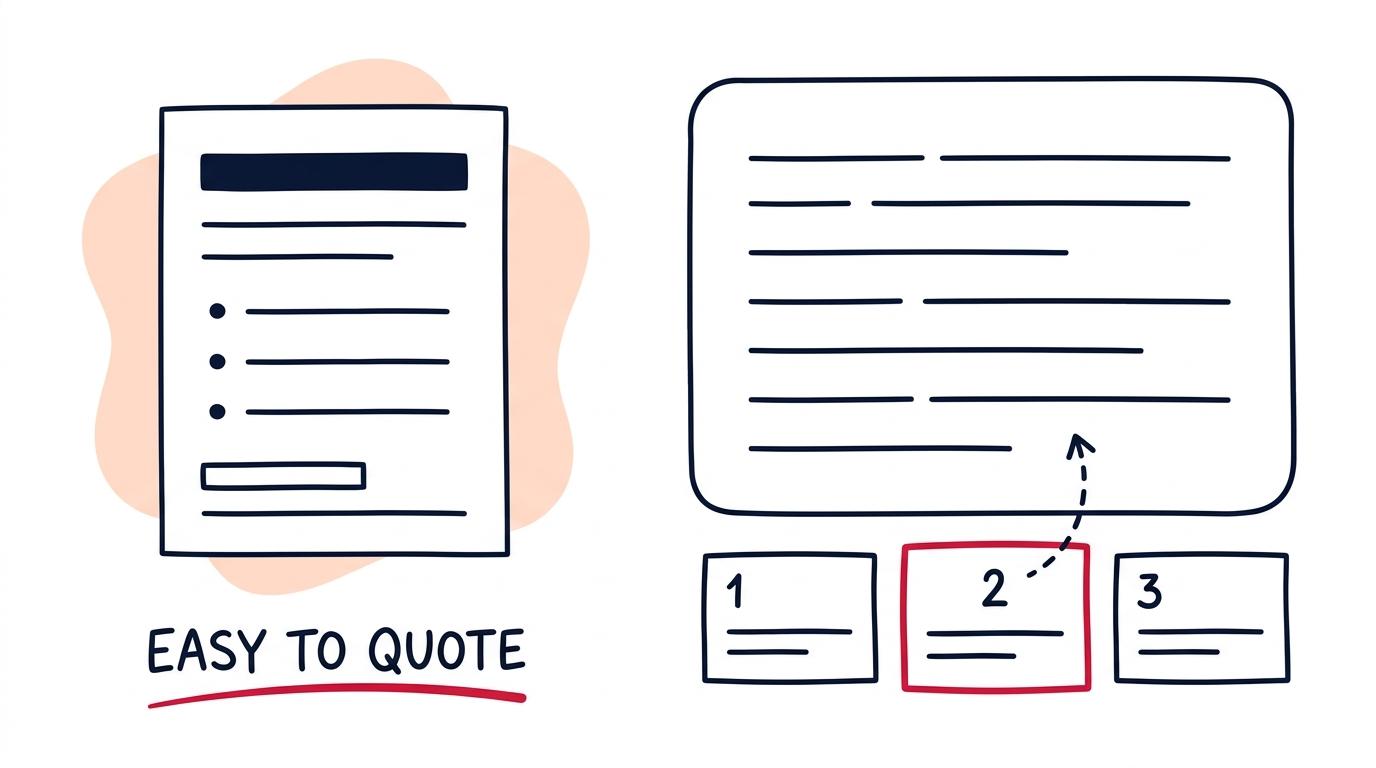
AI systems pull passages. Pages built as continuous argument, where the point only emerges after four paragraphs, are hard to extract from. Pages built as clearly labeled answers are easy.
Practically that means:
- Put the answer immediately after the question. A heading that asks something, followed by a direct answer in the first sentence or two, then the detail.
- Use headings that match how people phrase things. Real questions rather than clever section titles.
- Keep paragraphs short. A self contained two or three sentence paragraph is a quotable unit.
- Use lists for anything enumerable. Steps, criteria, and comparisons extract cleanly from a list and poorly from prose.
- State specifics plainly. Numbers, ranges, and timelines get quoted. Hedged generalities don't.
None of this makes the writing worse for humans. It's the same structure that makes a page scannable, which readers preferred anyway.
Be Specific Enough to Be Worth Citing
Generic content has no reason to be chosen. If forty pages say roughly the same thing, a system picking sources has no basis for preferring yours.
What makes a page worth citing is information that isn't everywhere else. Actual price ranges from work you've done. Timelines from real projects. The failure modes you've watched happen. Details specific to your region, trade, or customer type.
This is the durable advantage small businesses have. You know things from doing the work that no amount of content production can synthesize, and that's exactly the material that gets selected.
Answer the Question Somebody Actually Asked
Queries put to an assistant look different from queries typed into a search box. People type three words into Google. They ask an assistant a full question, often with context attached, such as what a small business should budget for a website when it only needs five pages.
That favours pages built around real questions rather than around keywords. A section headed with the question somebody would ask, answered directly underneath, matches this far better than a page optimized for a short phrase.
It's also worth covering the follow up questions on the same page. Someone asking what something costs will ask next what changes the price, and whether it's worth it. A page that handles the whole chain is more likely to be treated as the complete answer than one that handles a single step.
Consistency Across the Web Matters
These systems build confidence from repetition. A business described the same way across its own site, its Google Business Profile, industry directories, and wherever else it appears is easier to represent accurately than one whose details conflict.
Make sure your name, what you do, where you work, and how to reach you match everywhere. Contradictions make you a risky source, and risky sources get left out.
Structured data helps here too. Markup that states plainly what a page is, who wrote it, and when, removes the need for anything to infer it. It's invisible to readers and it makes a page considerably easier for a machine to describe accurately.
What This Means for a Local Business
For a business serving a specific area, the picture is more favourable than the general anxiety suggests.
When somebody asks an assistant for a recommendation in a particular place, it has to draw on sources that establish who operates there and whether they're any good. That means your Google Business Profile, your reviews, directories, and any local coverage. A business with a complete profile, genuine reviews, and consistent details across the web is materially easier to recommend than one that's thinly documented.
There's also less competition for this than for national topics. Very few local businesses are thinking about it at all, which makes the ordinary work of being clearly and consistently described unusually effective right now.
The practical version is short. Make sure it's obvious in plain text on your site which areas you serve and what you do in each. Keep your profile and reviews active. Ensure the details agree everywhere. That's most of the local strategy, and it happens to be the same work that helps you in conventional search.
Fundamentals Still Decide Most of It
There's a temptation to treat AI search as a separate discipline with separate tactics. Mostly it isn't. The systems draw heavily on pages that already rank well, so the ordinary work still applies.
- Pages that are genuinely about one thing.
- A site that's technically sound and quick.
- Content that answers questions people actually ask.
- Other credible sites referencing you.
- Accurate, complete business information.
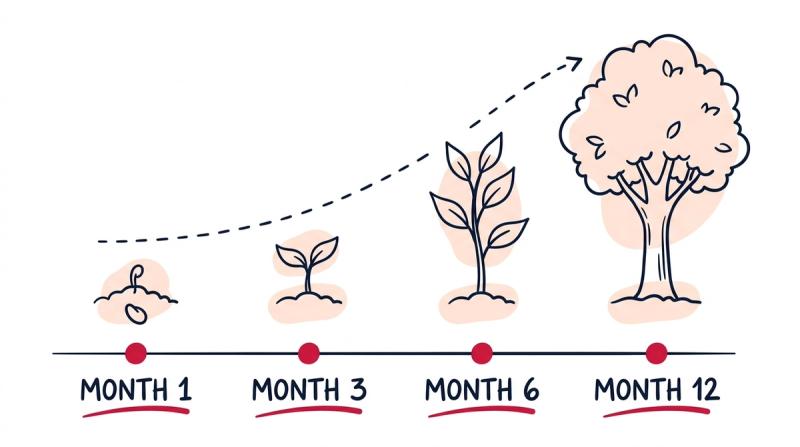
If you haven't done these, doing them is your AI search strategy. If you've, the structural changes above are the additional step. The timeline is similar to ordinary search, which we covered in How Long Does SEO Actually Take.
Measure It Differently
Old metrics will mislead you here. Impressions can rise while clicks fall, and that isn't necessarily failure if you're being cited to people who later search for you by name.
Worth watching instead:
- Whether visits from AI assistants and AI search appear in your analytics referrers.
- Whether direct traffic and branded searches rise, which often follows being cited.
- Whether new customers mention having seen you somewhere they can't quite name.
- Whether you appear when you ask an assistant the questions your customers ask.
That last one takes five minutes. Ask the same questions a customer would and see who gets named. It's the most direct read available.
The Work Points the Same Direction
The reassuring part is that almost nothing here conflicts with what was already good practice. Be specific, structure clearly, answer real questions, keep your information consistent, and know something worth knowing. That worked for search engines, it works for AI systems, and it works for the person actually reading.
The businesses that struggle will be the ones that were getting by on vague pages. The ones with real expertise, written down clearly, are in a stronger position than before. That's the direction we push SEO and content work now, because it's the same direction either way.