Every business owner who has hired for SEO has asked this, and most have been given an answer designed to close a sale rather than describe reality. Anyone promising first page results in thirty days is either targeting phrases nobody searches or hoping you won't check.
The real answer is that meaningful results usually take four to twelve months, and the reasons are structural rather than a matter of effort.
Why It Can't Be Fast
Three things make search slow, and none of them can be bought around.
First, search engines have to find and reprocess your pages, which isn't instant. Second, ranking is comparative. You aren't meeting a standard, you're being placed against every competitor already there, most of whom have been at it longer. Third, some of the strongest signals are things like other sites referencing yours, and those accumulate at their own pace.
That last one is the real constraint. You control your site. You don't control who links to it, and that's measured in months.
A Realistic Month by Month Picture
Timelines vary, but the shape is consistent.
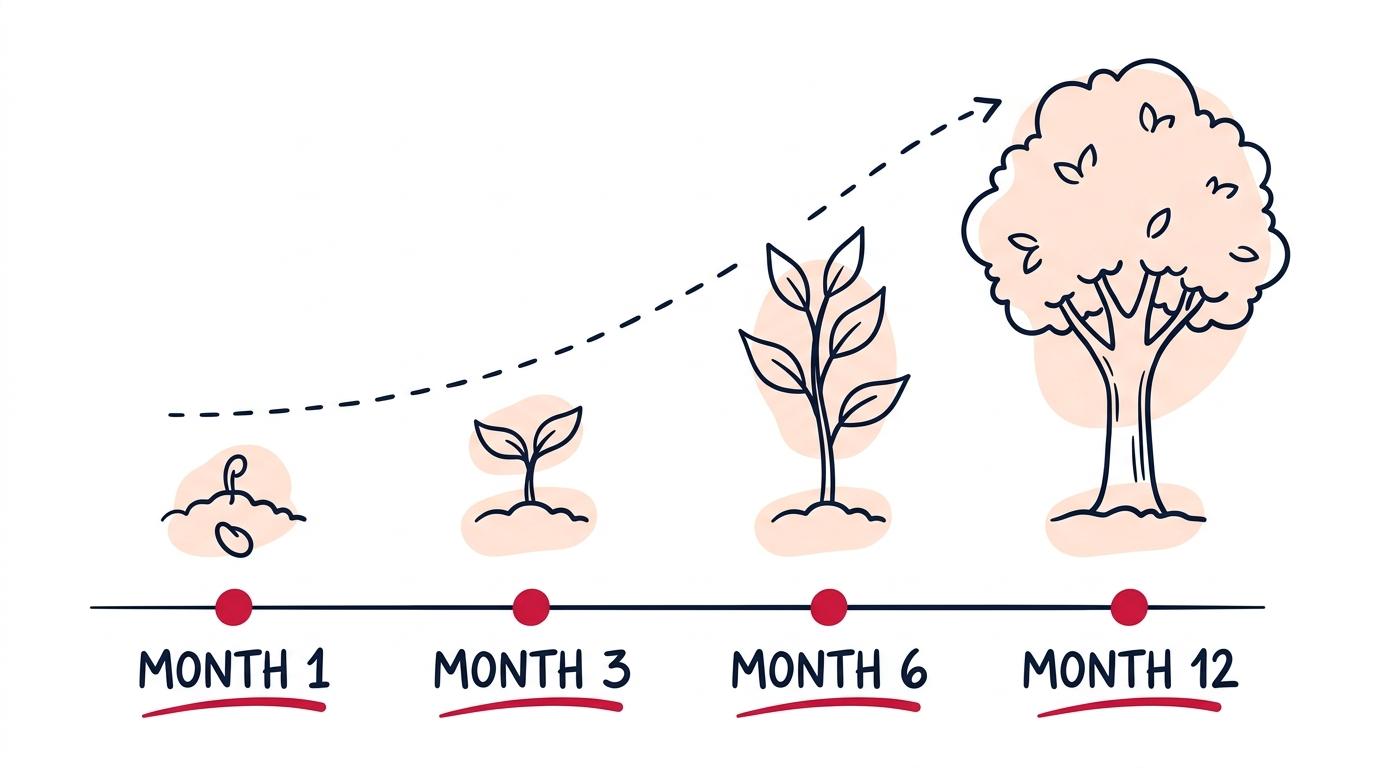
- Months one and two. Fixing and building. Technical problems get resolved, page structure gets sorted out, and content work begins. Rankings barely move, and that's expected.
- Months three and four. The first movement, usually on long specific phrases with little competition. Traffic is still small but it's the right kind of traffic.
- Months five through eight. Compounding. Pages published earlier start to rank, which brings visits, which brings mentions, which lifts everything else. Most businesses see the first real leads from search in this window.
- Months nine through twelve. Competitive terms become reachable. This is where the work starts to look like a channel rather than an experiment.
What the First Ninety Days Should Involve
Because early rankings barely move, the first quarter is where people lose confidence. Knowing what should be happening makes it easier to judge whether the work is real.
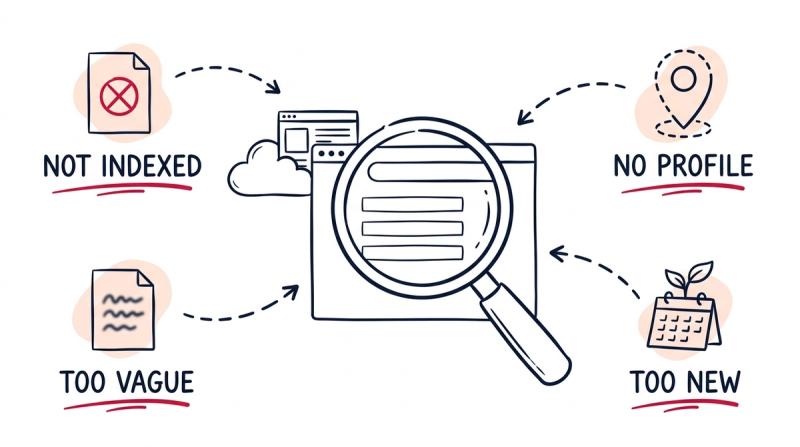
- A technical review. Whether pages can be crawled and indexed, how quickly the site loads, whether it works properly on a phone, and whether anything is actively blocking search engines.
- Deciding what to target. Which phrases are realistic now and which are aspirational, based on what competitors have rather than on what sounds impressive.
- Fixing the page structure. One clear subject per page, sensible titles and descriptions, and internal links that make sense.
- Local setup, if relevant. Google Business Profile claimed, verified, fully filled in, and consistent with the site.
- Starting the content work, aimed at the questions customers ask before buying.
If three months have passed and none of this has happened, the lack of ranking movement isn't patience being required. It's nothing having been done.
What Determines Your Pace
The range is wide because circumstances differ enormously.
- Site age and history. An established domain moves faster than one registered last month.
- Competition. A niche local service is a different problem than a national category with well funded competitors.
- Starting condition. A site with solid technical foundations begins from a better place than one with problems to unwind.
- How much you publish. More useful pages means more chances to rank, provided they're genuinely useful.
- Local versus national. Local search often moves considerably faster, particularly with a well maintained Google Business Profile.
That last point is worth emphasizing for small businesses. Ranking nationally for a broad term can take years. Ranking well in one city for a specific service can happen inside a few months.
Signals That It Is Working Before Rankings Move
Judging progress by position alone means flying blind for a quarter. These move earlier.
- Impressions in Google Search Console. How often you appear at all, which rises before position does.
- The number of distinct queries you show up for, which broadens before any single one improves.
- Average position trending upward, even from a position nobody ever sees. Going from seventieth to thirtieth is invisible to you and is real progress.
- Pages indexed, which confirms the foundation is sound.
If impressions and query count are climbing at month three, the work is landing even though the phone hasn't changed yet.
What Makes It Take Longer Than It Should
A few things reliably waste months.
- Chasing terms far out of reach, instead of starting narrow and building up.
- Restarting every quarter, because a new approach every few months means never finishing one.
- Publishing thin pages in volume, which does very little now that quality thresholds are what they're.
- Ignoring the technical basics, so that good content sits on a site search engines struggle with.
Utah Powersport Pros is a reasonable example of the alternative. Rather than competing for broad repair terms across the state, the site was structured so every machine type and every town had a page of its own. Narrower targets, less competition, and the aggregate ends up larger than the broad term would've delivered.
Signs You're Being Sold Rather Than Served
A few claims are reliable indicators that the timeline you've been given isn't real.
- Guaranteed first place. Nobody controls Google's results, so nobody can guarantee a position. What can be promised is specific work, not a specific outcome.
- Results promised within thirty days. Achievable only for phrases so obscure that ranking for them changes nothing.
- Reports full of numbers that don't connect to the business. Impressions and rankings matter as early signals, but by month six the conversation should involve inquiries.
- No explanation of what's being done. Vagueness about the actual work is rarely protecting a clever method.
- Large volumes of new links appearing quickly. Links bought in bulk are a liability rather than an asset.
Reasonable expectations run the other way. A clear list of what will be done, honest framing of which targets are realistic, and early reporting on impressions and query counts rather than on positions that haven't moved yet.
What You Can Do Yourself to Move It Faster
Some of the fastest gains don't require a specialist, and they're often left undone while people wait for an agency to deliver something.
- Finish your Google Business Profile completely. Every field, real photographs, correct hours, specific categories. For a local business this frequently produces results within weeks rather than months.
- Ask satisfied customers for reviews. Steadily, not in one burst. Reviews influence local ranking and they influence whether somebody calls after they find you.
- Write down the answers you already give. The questions customers ask are pages waiting to be written, and nobody knows the answers better than you do.
- Fix your own contact details everywhere. Old addresses and disconnected numbers scattered across directories actively work against you.
- Tell people the site exists. Mentions from suppliers, local organizations, and trade bodies are ordinary links, and they count.
None of this is technical. All of it compounds with whatever else is being done.
Treat It Like a Channel You're Building
The right comparison isn't advertising, where spending produces traffic immediately and stops when you stop. It's closer to building an asset. Slow at first, then compounding, and the pages you published in month two keep working in year three without further spend.
That's the actual case for it, and also why the first few months require some patience. If you want to know whether your own timeline is realistic, the site's starting condition tells you most of it, which is where our SEO work generally begins.