Content marketing has a branding problem among small businesses, and it's deserved. The phrase suggests a full time role, a content calendar, and a stream of posts nobody asked for. Most owners hear it and reasonably conclude they don't have time.
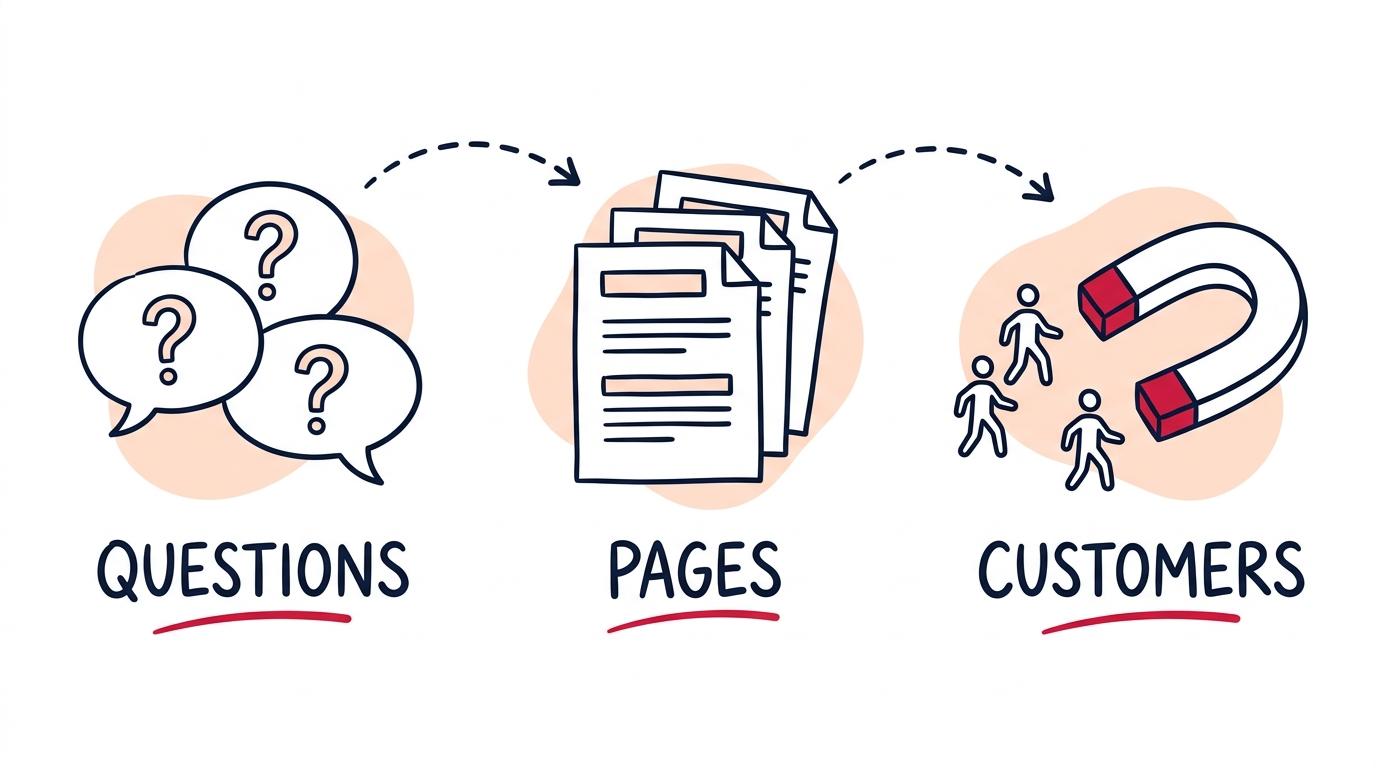
The version that actually works for a business with a handful of staff is much smaller than that. It's answering the questions your customers already ask you, in writing, in a place search engines can find. That's close to the whole method.
Your Topics Already Exist
The hardest part is supposed to be deciding what to write about. It isn't, because you're already answering these questions every week.
Think about the last twenty conversations with prospective customers. The same handful of questions came up repeatedly. What does this cost. How long does it take. What's the difference between these two options. How do I know if I need this. Do I have to do anything to prepare.
Each of those is a page. You already know the answer well enough to explain it out loud, which means the writing is mostly transcription. Keep a note somewhere and add to it every time somebody asks something twice.
Write for the Person Deciding, Not the Person Browsing
There's a meaningful difference between content that attracts traffic and content that attracts customers, and small businesses should care almost entirely about the second.
A post about industry trends might get shared. A page explaining what a service costs and what affects the price gets read by somebody actively deciding whether to hire you. The second is worth far more even if it gets a tenth of the visits.
Practical filter: if a reader could act on this immediately and be closer to a decision, it's worth writing. If it's interesting but leads nowhere, skip it.
Publishing Rhythm Matters Less Than People Say
The advice to post several times a week is aimed at businesses whose product is attention. Yours probably isn't.
One genuinely useful page a month, sustained, beats a burst of eight and then silence. Search results reward depth and durability, and a page that thoroughly answers one question keeps earning visits for years. Ten thin posts don't.
If a month feels like too much, quarterly is still worth doing. Consistency matters more than frequency, and the pages compound regardless of the pace at which you added them.
What Makes a Page Worth Reading
A few things separate content that works from content that fills space.
- Specifics rather than generalities. Real numbers, real ranges, real timelines. Vagueness reads as evasion.
- Structure you can scan. Clear headings, short paragraphs, and lists where lists make sense. Most people scan before they read, and increasingly so do the AI systems summarizing your page.
- An honest answer, including when it isn't you. Saying plainly when somebody doesn't need your service buys enormous credibility for the times they do.
- Written like you speak. Formality doesn't read as professional, it reads as distant.
- A clear next step, so somebody convinced by the page knows what to do.
The Five Formats That Do Most of the Work
Almost every useful page for a small business falls into one of a handful of shapes. Knowing them removes most of the blank page problem.
- The cost explainer. What something costs, what moves the price, and what changes between tiers. Consistently the most read page on a service business site, because everyone wants to know and most competitors refuse to say.
- The comparison. Two options side by side, with an honest account of who each suits. Reaches people at the exact moment they're choosing.
- The process walkthrough. What actually happens, step by step, once somebody hires you. Removes the uncertainty that stops people making contact.
- The diagnostic. How to tell whether you've a particular problem, and what to do about it. Useful whether or not the reader hires anyone.
- The mistake list. What goes wrong and how to avoid it. Demonstrates experience in a way that claiming experience doesn't.
Pick the one that matches a question you get asked, and the structure of the page is already decided.
Repurpose Instead of Producing More
Writing something once and using it once is the most common waste in small business content.
- A page answering a common question becomes the answer you email to prospects.
- It becomes a section of a sales conversation you no longer have to improvise.
- It becomes several short social posts.
- It becomes part of the FAQ on your site.
The same effort covers four jobs. This is how a business with no marketing staff makes content sustainable.
How to Tell If It's Working
Don't judge it by views alone. The useful signals are narrower.
- Are people arriving from search for the questions you wrote about?
- Are they going on to look at a service page afterwards?
- Are prospects mentioning something they read before they called?
- Are you spending less time explaining the same things by phone?
That last one is real value even before it shows up in traffic. When Juneau Poop Scoop put its service areas and details in writing rather than fielding them by phone, the site started doing part of the sales conversation on its own. That's worth something regardless of where the page ranks.
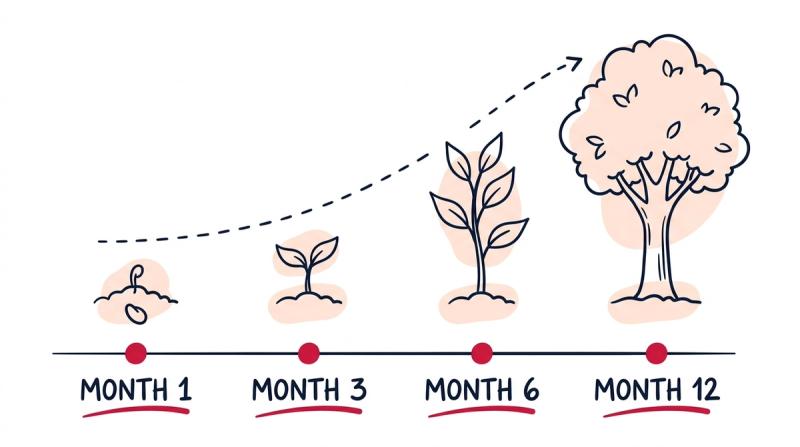
Bear in mind that this is a slow channel. Pages take months to gain traction, which we covered in How Long Does SEO Actually Take.
Using AI Without Producing Filler
The obvious question now is whether to have a model write it. The honest answer is that it is useful for some parts of the job and actively harmful for others.
It works reasonably well for getting a rough structure down, for turning notes you dictated into readable prose, for tightening something you wrote too long, and for drafting the meta description nobody enjoys writing.
It fails at the part that matters. It doesn't know your prices, your region, the mistake you watched a customer make last year, or the reason you do the work differently than the shop down the road. Those specifics are the entire reason your page deserves to exist, and a page without them is indistinguishable from the forty others already covering the topic.
A workable division is to bring the substance and let the tool help with the shaping. Generic content was already a poor investment. Now that anyone can produce unlimited amounts of it instantly, it's worth close to nothing.
Start With Five Pages
Don't plan a year of content. Write down the five questions you answer most often, write one page for each, and publish them properly. That's a real content foundation, it's achievable in a few weeks, and it'll teach you more about what your audience responds to than any amount of planning.
If it turns into a habit after that, good. If it stays at five solid pages that keep working, that's still a genuine asset. Either way it beats an empty blog, and it's where our own content work usually starts.